Sunday, July 21, 2024

Vietnam Stock Analysis - PVS


Large Workload to Bolster Profits from 2024-2026

As highlighted in our previous sector report, we believe that Vietnam's oil and gas industry is returning to its "golden era" (similar to 2011-2015) due to sustained high oil prices, which serve as a catalyst for new projects.

Unlocking these oil and gas projects not only brings significant M&C backlog value but also positively impacts other PVS service segments. Consequently, Q1/2024 parent company net profit grew by 40% YoY, despite flat revenue. For Q2/2024, we estimate pretax profit at VND 232 billion (-21% YoY).

2024 is pivotal for PVS as it embarks on key projects like Lô B, Sư Tử Trắng, and Lạc Đà Vàng. Typically, the first year involves surveying, designing, and procuring equipment, with major disbursements and work expected in 2025 and 2026.

We project an 8% CAGR for parent company net profit from 2024 to 2026, compared to 1% for the preceding five years (2019-2023). Currently, PVS trades at a P/E of 22x (it means the market is evaluated the annual net profit growth is at 25%), above the 5-year average of 17x. We believe this price reflects much of the company's growth potential from winning numerous projects. We set a target price of VND 42,400/share, recommending a NEUTRAL rating for this stock.

<<skip t2speech
SectorTickerYearWDCODEValue (vnd/%)Growth to Previous
DKPVS2023YRevenue19,373,600,000,00018.37%
DKPVS2022YRevenue16,366,400,000,00014.77%
DKPVS2021YRevenue14,260,000,000,000
DKPVS2023YNet Profit1,060,000,000,0000.89%
DKPVS2022YNet Profit1,050,700,000,00039.96%
DKPVS2021YNet Profit750,700,000,0005.75%
DKPVS2020YNet Profit709,900,000,000

>>skip t2speech


Projected Profit for the Second Half of 2024 Looks Promising

We estimate a 6-month pretax profit of VND 600 billion (+7% YoY) for the first half of 2024, achieving 38% of our projection. For Q2/2024, revenue and pretax profit are estimated at VND 4,490 billion (-5% YoY) and VND 232 billion (-21% YoY), respectively, as the company is still executing projects and hasn't finalized progress payments.

Historically, the company tends to book more profit in the latter half of the year, particularly in Q4. For instance, Q4/2021 saw a significant drop due to a VND 92 billion unusual loss from joint ventures, despite most quarters recording profits over VND 150 billion, mainly due to issues with the FPSO Lam Sơn lease contract. Additionally, in Q4/2023, pretax profit fell by 20% YoY despite a 27% YoY revenue increase, primarily due to a 128% YoY rise in administrative expenses.

In the construction industry, year-end is typically a time for finalizing completed work volumes to process contractor payments and assess business performance for year-end bonuses. 

Based on this, and current project information, we estimate H2/2024 profit to grow over 80% YoY. For the full year 2024, we project parent company net profit at VND 1,250 billion (+22% YoY), with corresponding EPS of VND 2,355.

Monday, January 8, 2024

FPT Telecom - Gói cước

Giga

140.000 vnđ/tháng

Download/upload speed 150 Mbps

Cước thuê thiết bị đầu cuối: 50.000 vnđ/tháng

Giá: 220k/tháng


Sky

Download up to 1Gb

Upload 150 Mbps

265.000 vnd/tháng


Meta

370.000 vnd/tháng

Sunday, January 7, 2024

Vietnam FDI

2023

FDI into Vietnam rose by 3.5 percent from a year earlier to USD 23.18 billion in 2023, the largest amount since the series began in 1991. FDI pledges (vốn đăng ký), which serve as an indicator of future FDI disbursements, grew 32.1% year-on-year to USD 36.6 billion. Singapore, Japan, and Hong Kong were the leading source of foreign.

According to the agency, the major investment destinations in the country this year include Ho Chi Minh City, Hai Phong, Quang Ninh, Bac Giang, Hanoi, Bac Ninh, Binh Duong, and Dong Nai.

This year, foreign investors have invested in 18 out of 21 economic sectors, with processing-manufacturing receiving 23.5 billion USD or 64.2% of the total FDI capital (up 39.9% year on year), real estate nearly 4.67 billion USD (up 4.8%), power production and distribution 2.37 billion USD (up 4.9%), and finance-banking 1.56 billion USD (up nearly 27 times).

In 2023, 111 countries and territories have invested in Vietnam, led by Singapore with over 6.9 billion USD, accounting for 18.6% of total FDI inflows, a rise of 5.4% year on year. Japan ranked second with nearly 6.57 billion USD, while Hong Kong came third with 4.68 billion USD.


English - Vietnamese

Processing-manufacturing: Công nghiệp chế biến - chế tạo

FDI pledges: Vốn đăng ký

FDI: Vốn thực hiện

Power production and distribution: Sản xuất phân phối điện

Monday, December 25, 2023

Ports in Vietnam

Tân Cảng Phú Hữu Port

Tan Cang - Phu Huu Port is a seaport located within the planning of port group number 5, belonging to the port area on the Dong Nai River. The port is situated in Phu Huu Ward, District 9, and is well-connected to the road system, linking to the Ring Road 2 and the Ho Chi Minh City – Long Thanh Expressway through Nguyen Duy Trinh Street and Nguyen Thi Dinh Street (via Cat Lai Port). It also has good inland waterway connections with deep-water ports and the inland container depot (ICD) system in the hinterland.

Cát Lái Port or Tân Cảng - Cát Lái Port

This port is located on the Đồng Nai River, is one of the key ports in the port system of Ho Chi Minh City. It falls under the management of Saigon Newport Corporation, Ministry of National Defense. Cát Lái Port is situated 43 nautical miles from the Vũng Tàu Pilot Station, with a draft of 12.5 meters at the wharf. It currently stands as the largest and most modern international container port in Vietnam, situated in Thu Duc City, Ho Chi Minh City. It ranks among the top 25 leading ports globally, holding a container import-export market share of over 90% in the Southern region and nearly 50% nationwide.


Vũng Tàu Pilot Station: trạm hoa tiêu Vũng Tàu

Sunday, December 17, 2023

Build something many people want

I once established a technology company and served as its director in my twenties. The company had seven members, each holding a full-fledged position.

At that time, the startup fever had not yet reached Vietnam; otherwise, I might have proclaimed myself a founder. We spent a considerable amount of time creating the company's website, designing the logo, choosing a slogan, printing business cards, setting up email addresses, establishing an office, buying furniture, acquiring machinery and equipment, signing documents for equity distribution, rights, and responsibilities.

In essence, we had everything a business needed, except for customers. As a result, the company closed its doors, generating no revenue.

In my second entrepreneurial venture, I focused not on embellishments but on customer search and service, emphasizing 100%. The company only had a website in the second year and a small office in the third year. No one held any titles unless necessary for communication with clients.

We did only what was essential to operate the company, concentrating on revenue generation, expanding the market, and attracting talent. Today, we have a solid team, satisfactory revenue, and happy customers.

Between these two experiences is nearly 12 years working at Google. Google is known for its beautiful offices, but few know that for much of its history, Google rented spaces, renovated them, but did not build new ones.

Google thrived for almost 20 years before considering constructing its headquarters in 2015. Even then, there were concerns that the company had run out of innovative ideas, unsure of what new thing to do with the money.

The key to successful business is creating something that many people want. Silicon Valley companies don't rush to build headquarters because constructing ten buildings won't help them address the world's real problems.

Creating something many people want is a vague, costly, and risky process. The U.S. Bureau of Labor Statistics states that half of new businesses typically close within five years, and 65% shut down within a decade. The primary reason is creating something nobody needs, and the second reason is running out of money. No startup has ever died due to a lack of an office.

Each year, Singapore hosts a competition to find solutions for significant cybersecurity problems. The Singapore government commits to providing funding of up to one million SGD, non-refundable and without taking any rights or shares in the projects. The only requirement, but a wise one, is that teams must register a business in Singapore and hire at least 50% of their workforce from the island. I know of at least one team from Vietnam that was selected and is currently operating as a Singaporean business.

The U.S. government also has numerous direct sponsorship programs, cuts, or tax breaks for startups and small businesses. The Small Business Innovation Research program, established in 1982, disburses an average of 2.5 billion USD each year to small companies to promote research and development, technology transfer in all fields.

An expert told me that Vietnam cannot do the same as other countries because those who receive budget money and run a loss-making business will be held responsible and may even face imprisonment. Perhaps, first of all, authorities need to review and innovate the regulations that are hindering creative thinking. Something new cannot be created on an old mindset.

"Build something people want" is the motto of Y Combinator, a private technology incubator that has produced a series of unicorn companies like Dropbox, Stripe, Airbnb, Doordash, and more. They are considered innovation and creative innovation monuments, solving many real-world problems, even though behind them are thousands of companies that have failed.

To stimulate innovation, one must be willing to embrace failure. Otherwise, I fear Vietnam will only build towering monuments of innovative innovation, looking tall, without solving any urgent problems.

Dương Ngọc Thái


Monday, December 11, 2023

Ring Road 2

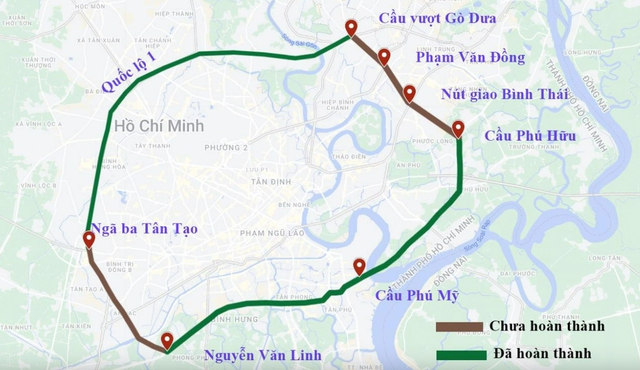
It took about 5 years to complete the 50 km of Ring Road 2. However, the remaining 14 km is still under construction due to insufficient funding and difficulties in land clearance.


Ring road 2 was planned in 2007, with a length of 64km and a scale of 6-10 lanes. It starts from Nguyen Van Linh Street (Binh Chanh district), stretches to National Highway 1, and then loops back to Nguyen Van Linh, forming a ring road around Ho Chi Minh City. The total investment capital for this project is 12,540 billion VND, making it a vital infrastructure for transportation in the suburban areas of the city.

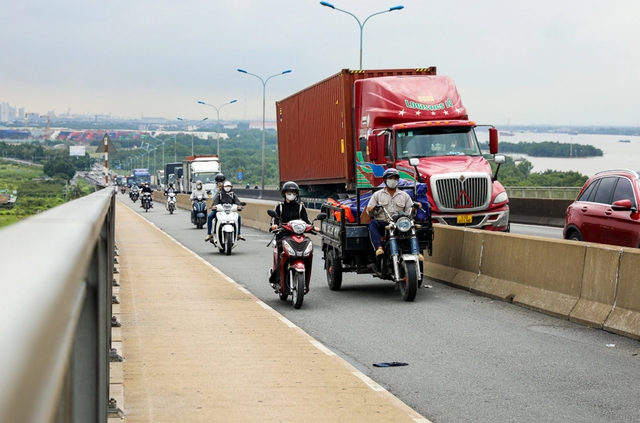
In addition, Ring road 2 plays an important role in connecting industrial zones, seaports, and highways. The picture shows Ring road 2 from the direction of Phu My Bridge (District 7) to Phu Huu Bridge (Thu Duc City). This is a bridge that connects the Tan Thuan Export Processing Zone in particular and the southern region in general with the eastern Ring road of the city. From here, goods can be easily transported to the Cat Lai port system through Vo Chi Cong and Dong Van Cong roads, helping to alleviate traffic congestion on National Highway 1A.

It is difficult to buy an apartment under 3 billion VND in Ho Chi Minh City

11 Dec 2023

After 9 months of searching, Mrs. Bich Nguyen, an accountant at a food company in District 1, still hasn't found an affordable apartment for under 3 billion VND in Ho Chi Minh City.

Mrs. Nguyen initially planned to buy a two-bedroom apartment, not too far from the city center, with a price range of 2-2.5 billion VND. She and her husband researched projects in the An Duong Vuong area (Binh Tan District). However, a 48 square meter one-bedroom apartment there is already priced at 2.8 billion VND, while two-bedroom apartments with an area of 58-63 square meters, in the worst location, range from 3.1-3.3 billion VND (excluding VAT).

Switching to another project on Vo Van Kiet Street, Mrs. Nguyen said that the price for a two-bedroom apartment, with an area from 62 square meters and above, is over 3 billion VND excluding VAT. According to real estate brokers, these are currently the only two projects in the area with available units for sale and the most "affordable" prices. "Beyond our financial means, we have to explore other areas," she said.

Moving to the Eastern area, Mrs. Nguyen became even more shocked as all the projects here were priced above 50 million VND per square meter. One project, located quite far from the city center, on the Belt Road 3 route, advertised the "cheapest" price in the market at only 45 million VND per square meter, but in reality, all units with good positions and decent areas were over 3 billion VND.

"We intended to look for older apartments, but the ones with good quality, with no legal complications, are priced over 45 million VND per square meter. The cheaper ones either have legal issues or the quality has deteriorated," Mrs. Nguyen said.

Mrs. Hoa, 35 years old, living in Tan Phu District, also mentioned that she had saved for many years in the hopes of buying an apartment in Ho Chi Minh City for settling down and establishing her career. However, her current family budget can only afford an apartment for around 2 billion VND (after considering borrowing 1 billion VND).

Last week, she looked into apartments in an urban area located on Bo Bao Tan Thang Street (Tan Phu District), but an 80 square meter unit was priced at 3.9 - 4.3 billion VND, while 55-60 square meter units were priced at 2.5-2.7 billion VND and were unfortunately located in blocks affected by legal complications.

Her husband and she are currently considering an older condominium on Luong Minh Nguyet Street, Tan Thoi Hoa Ward, with the prices of 2.9-3.2 billion VND for 60-66 square meter units. "Three years ago, the price for this condominium was only 30-32 million VND per square meter, but we couldn't afford it at the time. Now, with the price rising to 45 million VND per square meter, we can't afford it either. Our income is increasing slowly, while housing prices are rising rapidly, so no matter how much we save, it's still not enough to buy a house," Mrs. Hoa shared her frustration.

According to data from the Batdongsan website, in the third quarter of this year, the demand for buying apartments at prices below 40 million VND per m2 is very high. However, in Ho Chi Minh City, there is only one project selling below 40 million VND per m2, while the rest are priced from 45-80 million VND. Most of the projects being launched in the period of 2022 - 2023 have prices above 3 billion VND per unit.

In response to this trend, Mrs. Duong Thuy Dung, CEO of CBRE Vietnam, said that in the first 10 months of this year, 96% of the available supply of apartments in Ho Chi Minh City were high-end, with an average price of 61 million VND per m2, with no affordable projects. Based on the amount of new projects planned for development in 2024, 71% of them are high-end; 16% are mid-range (priced below 2,000 USD, equivalent to below 46 million VND per m2); and 12% are affordable homes (priced below 1,000 USD, or below 23 million VND per m2).

CBRE Vietnam also states that in the past three years, the proportion of mid-range and affordable apartments in the city has continuously decreased. Specifically, in 2019, mid-range and affordable apartments accounted for 70% of the supply, which decreased to 20-30% in the 2020 - 2021 period, 6% in 2022, and 16% in the first 10 months of this year. "Mid-range and affordable apartments have good consumption power and high demand, but there is a lack of supply," said Mrs. Dung.

Data from Cushman & Wakefield also shows that in the past decade, the housing supply in Ho Chi Minh City has increased nearly 4.4 times, with prices increasing by 200%, with an average annual increase of 12% for apartment prices in the city. The report from the Ho Chi Minh City Real Estate Association also indicates that from 2020 to now, the city has been experiencing a supply imbalance, with high-end homes dominating 70-80% of the market. The remaining properties are mid-range homes, and there are no affordable options.

"The current housing prices have exceeded the financial capacity of people with average urban incomes. To buy an apartment worth 2-3 billion VND, even with an annual savings of about 100 million VND, those in the first tax bracket (those who are financially unable to afford a commercial house and do not meet the requirements for a social house) would need 25 years to be able to afford a home,"