- 2024 vs 2023 ≈ +14.1%
- 2025 vs 2024 ≈ +33.1%
- The avg. growth of appartment prices in HCM was around 30%
- 2026:
- In 2 first Quarters of 2026, the prices stall as credit tightens
- Apartment prices in HCM & Hà Nội already discount future growth
- New supply priced for 2027–2030 income levels
- Price‑to‑income ratios in core districts are historically stretched
- Rental yields typically <4% gross, often <3% net after costs
Saturday, May 2, 2026
Vietnam Real Esate Credit Outstanding
Monday, December 25, 2023
Ports in Vietnam
Tân Cảng Phú Hữu Port
Cát Lái Port or Tân Cảng - Cát Lái Port
This port is located on the Đồng Nai River, is one of the key ports in the port system of Ho Chi Minh City. It falls under the management of Saigon Newport Corporation, Ministry of National Defense. Cát Lái Port is situated 43 nautical miles from the Vũng Tàu Pilot Station, with a draft of 12.5 meters at the wharf. It currently stands as the largest and most modern international container port in Vietnam, situated in Thu Duc City, Ho Chi Minh City. It ranks among the top 25 leading ports globally, holding a container import-export market share of over 90% in the Southern region and nearly 50% nationwide.
Vũng Tàu Pilot Station: trạm hoa tiêu Vũng Tàu
Monday, December 11, 2023
Ring Road 2
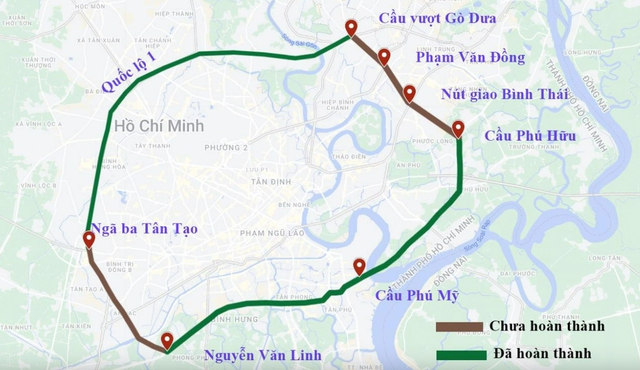
It took about 5 years to complete the 50 km of Ring Road 2. However, the remaining 14 km is still under construction due to insufficient funding and difficulties in land clearance.
Ring road 2 was planned in 2007, with a length of 64km and a scale of 6-10 lanes. It starts from Nguyen Van Linh Street (Binh Chanh district), stretches to National Highway 1, and then loops back to Nguyen Van Linh, forming a ring road around Ho Chi Minh City. The total investment capital for this project is 12,540 billion VND, making it a vital infrastructure for transportation in the suburban areas of the city.
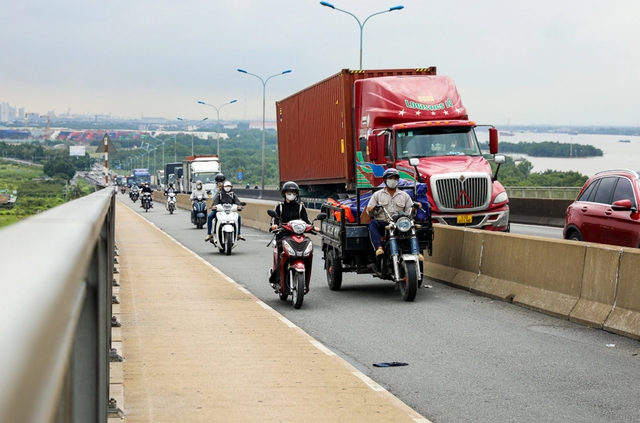
In addition, Ring road 2 plays an important role in connecting industrial zones, seaports, and highways. The picture shows Ring road 2 from the direction of Phu My Bridge (District 7) to Phu Huu Bridge (Thu Duc City). This is a bridge that connects the Tan Thuan Export Processing Zone in particular and the southern region in general with the eastern Ring road of the city. From here, goods can be easily transported to the Cat Lai port system through Vo Chi Cong and Dong Van Cong roads, helping to alleviate traffic congestion on National Highway 1A.
It is difficult to buy an apartment under 3 billion VND in Ho Chi Minh City
11 Dec 2023
After 9 months of searching, Mrs. Bich Nguyen, an accountant at a food company in District 1, still hasn't found an affordable apartment for under 3 billion VND in Ho Chi Minh City.
Mrs. Nguyen initially planned to buy a two-bedroom apartment, not too far from the city center, with a price range of 2-2.5 billion VND. She and her husband researched projects in the An Duong Vuong area (Binh Tan District). However, a 48 square meter one-bedroom apartment there is already priced at 2.8 billion VND, while two-bedroom apartments with an area of 58-63 square meters, in the worst location, range from 3.1-3.3 billion VND (excluding VAT).
Switching to another project on Vo Van Kiet Street, Mrs. Nguyen said that the price for a two-bedroom apartment, with an area from 62 square meters and above, is over 3 billion VND excluding VAT. According to real estate brokers, these are currently the only two projects in the area with available units for sale and the most "affordable" prices. "Beyond our financial means, we have to explore other areas," she said.
Moving to the Eastern area, Mrs. Nguyen became even more shocked as all the projects here were priced above 50 million VND per square meter. One project, located quite far from the city center, on the Belt Road 3 route, advertised the "cheapest" price in the market at only 45 million VND per square meter, but in reality, all units with good positions and decent areas were over 3 billion VND.
"We intended to look for older apartments, but the ones with good quality, with no legal complications, are priced over 45 million VND per square meter. The cheaper ones either have legal issues or the quality has deteriorated," Mrs. Nguyen said.
Mrs. Hoa, 35 years old, living in Tan Phu District, also mentioned that she had saved for many years in the hopes of buying an apartment in Ho Chi Minh City for settling down and establishing her career. However, her current family budget can only afford an apartment for around 2 billion VND (after considering borrowing 1 billion VND).
Last week, she looked into apartments in an urban area located on Bo Bao Tan Thang Street (Tan Phu District), but an 80 square meter unit was priced at 3.9 - 4.3 billion VND, while 55-60 square meter units were priced at 2.5-2.7 billion VND and were unfortunately located in blocks affected by legal complications.
Her husband and she are currently considering an older condominium on Luong Minh Nguyet Street, Tan Thoi Hoa Ward, with the prices of 2.9-3.2 billion VND for 60-66 square meter units. "Three years ago, the price for this condominium was only 30-32 million VND per square meter, but we couldn't afford it at the time. Now, with the price rising to 45 million VND per square meter, we can't afford it either. Our income is increasing slowly, while housing prices are rising rapidly, so no matter how much we save, it's still not enough to buy a house," Mrs. Hoa shared her frustration.
According to data from the Batdongsan website, in the third quarter of this year, the demand for buying apartments at prices below 40 million VND per m2 is very high. However, in Ho Chi Minh City, there is only one project selling below 40 million VND per m2, while the rest are priced from 45-80 million VND. Most of the projects being launched in the period of 2022 - 2023 have prices above 3 billion VND per unit.
In response to this trend, Mrs. Duong Thuy Dung, CEO of CBRE Vietnam, said that in the first 10 months of this year, 96% of the available supply of apartments in Ho Chi Minh City were high-end, with an average price of 61 million VND per m2, with no affordable projects. Based on the amount of new projects planned for development in 2024, 71% of them are high-end; 16% are mid-range (priced below 2,000 USD, equivalent to below 46 million VND per m2); and 12% are affordable homes (priced below 1,000 USD, or below 23 million VND per m2).
CBRE Vietnam also states that in the past three years, the proportion of mid-range and affordable apartments in the city has continuously decreased. Specifically, in 2019, mid-range and affordable apartments accounted for 70% of the supply, which decreased to 20-30% in the 2020 - 2021 period, 6% in 2022, and 16% in the first 10 months of this year. "Mid-range and affordable apartments have good consumption power and high demand, but there is a lack of supply," said Mrs. Dung.
Data from Cushman & Wakefield also shows that in the past decade, the housing supply in Ho Chi Minh City has increased nearly 4.4 times, with prices increasing by 200%, with an average annual increase of 12% for apartment prices in the city. The report from the Ho Chi Minh City Real Estate Association also indicates that from 2020 to now, the city has been experiencing a supply imbalance, with high-end homes dominating 70-80% of the market. The remaining properties are mid-range homes, and there are no affordable options.
"The current housing prices have exceeded the financial capacity of people with average urban incomes. To buy an apartment worth 2-3 billion VND, even with an annual savings of about 100 million VND, those in the first tax bracket (those who are financially unable to afford a commercial house and do not meet the requirements for a social house) would need 25 years to be able to afford a home,"
Wednesday, November 15, 2023
Ho Chi Minh City Ring Road 3
HCMC's Ring Road 3
Introduction
Benefits
Progress Update
10 June 2023
HCMC's Ring Road No.3 is a major traffic project in southern Vietnam, construction of the road which is set to begin this month. The first phase of the project will involve the construction of a 76-kilometer section with four lanes, with each locality responsible for clearing and building the portion within their territory.
One notable feature of the road is an overpass that will connect it to the HCMC - Long Thanh - Dau Giay Expressway, linking Dong Nai province with HCMC and connecting to the Dau Giay - Phan Thiet Expressway leading to the coastal city of Phan Thiet. Construction of the 47-kilometer section within HCMC is scheduled to commence on June 18 2023, while the other localities plan to start their respective sections later this month.
Ring Road No.3 will also serve as a connector to four other expressways: HCMC - Trung Luong, connecting HCMC with the Mekong Delta; Ben Luc - Long Thanh, the longest expressway in the south, linking HCMC with Long Thanh and Dong Nai provinces; HCMC - Moc Bai, facilitating travel between HCMC and the Cambodian border; and HCMC - Chon Thanh, connecting HCMC with Binh Duong province.
In HCMC, the road will feature a 13-kilometer elevated section, designed to optimize site clearance costs. The entire Ring Road No.3 will span 6 kilometers in Long An province and approximately 11 kilometers each in Binh Duong and Dong Nai provinces. Efforts are underway in Binh Duong to compensate affected families.
The project in Dong Nai province involves linking Nhon Trach District with HCMC's Thu Duc City, and a bridge over the Rach Chay River. The largest bridge on the road, costing VND1.8 trillion, will stretch 2.6 kilometers in length and 19.5 meters in width, including leading roads from both sides extending a total of 5.6 kilometers. The first phase of the ring road is expected to be completed in 2026, contributing to the socio-economic development of the southern region.
Tuesday, October 17, 2023
The expected increase in industrial land rental prices is 6-10% per year
16/10/2023
The industrial land rental prices are expected to increase by 6-10% per year in the northern region and 4-8% per year in the southern region. The optimistic demand from various industries and nationalities renting properties contributes to the growth of rental prices in localities.
According to many experts, the industrial real estate market continues to observe positive developments in the third quarter of 2023.
Information from CBRE Vietnam reveals that, despite the northern region experiencing a slight decline, with an average occupancy rate of industrial parks in the first-tier market reaching 80.2% in the third quarter of 2023, a decrease of 2.4 percentage points compared to the second quarter but an increase of 0.4 percentage points year-on-year. This decline in occupancy rate is attributed to the operation of new industrial parks in Bac Ninh and Hung Yen, leading to an additional supply of 597 hectares of industrial land.
Regarding demand, the market has witnessed significant transactions from tenants in the plastic manufacturing, textile, and eyeglass industries. Accordingly, the absorption rate of industrial land in the first-tier market reached 251 hectares in the quarter. Thus, in the first nine months of 2023, the absorption rate exceeded 700 hectares, which is more than 18% higher than the absorption rate for the entire year of 2022. Furthermore, industrial land rental prices continue to increase due to optimistic demand. Specifically, in the recent third quarter, the average rental price for the first-tier market in the northern region reached $131 USD/m2/lease term, representing a 2% quarterly increase and a 12% annual increase.
Similarly, the industrial market in the southern region has an average occupancy rate of industrial parks reaching 81.9%. The absorption rate of industrial land in the third quarter exceeded 190 hectares, a 5.9% increase compared to the previous quarter. In total, for the first nine months of 2023, the absorption rate reached over 770 hectares, nearly equal to the absorption rate for the entire year of 2022. The average rental price for the first-tier market in the southern region reached $189 USD/m2/lease term, showing a slight 1% increase compared to the previous quarter and a 13% increase from the same period last year. The market has witnessed significant transactions from Chinese and Japanese enterprises in various industries such as mechanical engineering, chemicals, plastics, rubber, and electronics.
CBRE statistics also show that in the first nine months of the year, the northern and southern markets recorded 752,000 m2 of newly operational warehouses and 450,000 m2 of newly operational ready-built factories. In the northern market, the average rental price for warehouses is around $4.6 USD/m2/month, while for factories, it is around $4.8 USD/m2/month. The occupancy rate of ready-built factory projects in the first-tier market reached 82.9%, an increase of 4.7 percentage points compared to the previous quarter.
As for the southern market, with abundant new supply, relatively stable rental prices for warehouses and ready-built factories were observed, with an average rental price of $4.5 USD/m2/month for warehouses and $4.9 USD/m2/month for factories. The occupancy rate for ready-built warehouses reached 56%, a decrease of 15 percentage points compared to the second quarter and 13 percentage points compared to the same period last year. Meanwhile, the occupancy rate for ready-built factories remained at a good level, reaching 91%, an increase of 1 percentage point compared to the second quarter.
Banks are pouring a significant amount of capital into real estate investors
Written on 12 Oct 2023
Credit flows into the real estate business have exceeded the annual growth rate of last year in the first seven months, amidst the situation where the bond market has "frozen" and the real estate sector is struggling with financial difficulties.
According to the data from the State Bank of Vietnam, the total outstanding loans for real estate reached approximately 2.7 quadrillion Vietnamese dong by the end of July, only a 5% increase compared to the beginning of the year, due to a sharp decline in demand for home and land loans. This debt balance accounted for 21% of the total credit in the economy.
In reality, credit flowing into the real estate sector consists of two components: consumer real estate loans and business real estate loans (focused on financing project investors, aiming to increase the supply in the market). Among them, the banking sector mainly disburses funds for consumer needs, such as home and land loans (accounting for 65% of total credit in the real estate sector). As of the end of July, the outstanding loans for home and land purchases decreased by 1.36% compared to the beginning of the year, reflecting the sluggish real estate market. Last year, outstanding loans for home and land purchases, as well as apartments, increased by a significant 31%.
While consumer demand for real estate has declined, banks have increased lending for real estate business, particularly focusing on the market supply by providing loans to project investors.
Data from the State Bank of Vietnam shows that the outstanding loans for real estate business reached 980 trillion Vietnamese dong by the end of July, a nearly 19% increase compared to the beginning of the year, surpassing the annual growth rate of the previous year (10.7%, equivalent to 100 trillion dong). Therefore, in the first seven months, over 150 trillion dong of banking capital flowed into the real estate business segment, accounting for nearly 30% of the total capital supplied to the economy.
The State Bank of Vietnam believes that these figures indicate that credit capital is concentrating on the supply side of the market, while the demand for credit to purchase consumer real estate for personal use is declining. This trend suggests that the legal difficulties of real estate projects are gradually being resolved, contributing to increasing the accessibility of credit for investors.
The bank increases lending to real estate investors in the context of the "frozen" bond market, as many businesses face difficulties due to poor market demand and struggle to manage their finances to repay their debts to bondholders.
According to the leadership of a bank, the sluggish corporate bond channel is one of the reasons that has led the real estate industry to turn to banks for capital in recent times. However, overall credit flow into the real estate sector in the first 7 months of the year remains relatively low due to a decrease in consumer demand.
The State Bank also stated that the non-performing loan ratio in the real estate sector is tending to increase. The non-performing loan ratio in the real estate sector at the end of July was 2.58%, significantly higher than the 1.8% recorded at the end of July last year.
In addition to real estate, according to the regulatory agency, credit flowing into other sectors in the first 7 months of the year reached approximately 9.75 quadrillion Vietnamese dong, also increasing at a low rate of 4.4% compared to the beginning of the year. This increase was mainly due to production and business activities and loans for personal use.
Small and medium-sized enterprises that have a need for borrowing face challenges in meeting business plan requirements, lack of financial transparency, and limited operational capacity. These factors make them categorized as high-risk customers.