Giga
140.000 vnđ/tháng
Download/upload speed 150 Mbps
Cước thuê thiết bị đầu cuối: 50.000 vnđ/tháng
Giá: 220k/tháng
Sky
Download up to 1Gb
Upload 150 Mbps
265.000 vnd/tháng
Meta
370.000 vnd/tháng
Giga
140.000 vnđ/tháng
Download/upload speed 150 Mbps
Cước thuê thiết bị đầu cuối: 50.000 vnđ/tháng
Giá: 220k/tháng
Sky
Download up to 1Gb
Upload 150 Mbps
265.000 vnd/tháng
Meta
370.000 vnd/tháng
FDI into Vietnam rose by 3.5 percent from a year earlier to USD 23.18 billion in 2023, the largest amount since the series began in 1991. FDI pledges (vốn đăng ký), which serve as an indicator of future FDI disbursements, grew 32.1% year-on-year to USD 36.6 billion. Singapore, Japan, and Hong Kong were the leading source of foreign.
According to the agency, the major investment destinations in the country this year include Ho Chi Minh City, Hai Phong, Quang Ninh, Bac Giang, Hanoi, Bac Ninh, Binh Duong, and Dong Nai.
This year, foreign investors have invested in 18 out of 21 economic sectors, with processing-manufacturing receiving 23.5 billion USD or 64.2% of the total FDI capital (up 39.9% year on year), real estate nearly 4.67 billion USD (up 4.8%), power production and distribution 2.37 billion USD (up 4.9%), and finance-banking 1.56 billion USD (up nearly 27 times).
In 2023, 111 countries and territories have invested in Vietnam, led by Singapore with over 6.9 billion USD, accounting for 18.6% of total FDI inflows, a rise of 5.4% year on year. Japan ranked second with nearly 6.57 billion USD, while Hong Kong came third with 4.68 billion USD.
Processing-manufacturing: Công nghiệp chế biến - chế tạo
FDI pledges: Vốn đăng ký
FDI: Vốn thực hiện
Power production and distribution: Sản xuất phân phối điện
This port is located on the Đồng Nai River, is one of the key ports in the port system of Ho Chi Minh City. It falls under the management of Saigon Newport Corporation, Ministry of National Defense. Cát Lái Port is situated 43 nautical miles from the Vũng Tàu Pilot Station, with a draft of 12.5 meters at the wharf. It currently stands as the largest and most modern international container port in Vietnam, situated in Thu Duc City, Ho Chi Minh City. It ranks among the top 25 leading ports globally, holding a container import-export market share of over 90% in the Southern region and nearly 50% nationwide.
Vũng Tàu Pilot Station: trạm hoa tiêu Vũng Tàu
I once established a technology company and served as its director in my twenties. The company had seven members, each holding a full-fledged position.
At that time, the startup fever had not yet reached Vietnam; otherwise, I might have proclaimed myself a founder. We spent a considerable amount of time creating the company's website, designing the logo, choosing a slogan, printing business cards, setting up email addresses, establishing an office, buying furniture, acquiring machinery and equipment, signing documents for equity distribution, rights, and responsibilities.
In essence, we had everything a business needed, except for customers. As a result, the company closed its doors, generating no revenue.
In my second entrepreneurial venture, I focused not on embellishments but on customer search and service, emphasizing 100%. The company only had a website in the second year and a small office in the third year. No one held any titles unless necessary for communication with clients.
We did only what was essential to operate the company, concentrating on revenue generation, expanding the market, and attracting talent. Today, we have a solid team, satisfactory revenue, and happy customers.
Between these two experiences is nearly 12 years working at Google. Google is known for its beautiful offices, but few know that for much of its history, Google rented spaces, renovated them, but did not build new ones.
Google thrived for almost 20 years before considering constructing its headquarters in 2015. Even then, there were concerns that the company had run out of innovative ideas, unsure of what new thing to do with the money.
The key to successful business is creating something that many people want. Silicon Valley companies don't rush to build headquarters because constructing ten buildings won't help them address the world's real problems.
Creating something many people want is a vague, costly, and risky process. The U.S. Bureau of Labor Statistics states that half of new businesses typically close within five years, and 65% shut down within a decade. The primary reason is creating something nobody needs, and the second reason is running out of money. No startup has ever died due to a lack of an office.
Each year, Singapore hosts a competition to find solutions for significant cybersecurity problems. The Singapore government commits to providing funding of up to one million SGD, non-refundable and without taking any rights or shares in the projects. The only requirement, but a wise one, is that teams must register a business in Singapore and hire at least 50% of their workforce from the island. I know of at least one team from Vietnam that was selected and is currently operating as a Singaporean business.
The U.S. government also has numerous direct sponsorship programs, cuts, or tax breaks for startups and small businesses. The Small Business Innovation Research program, established in 1982, disburses an average of 2.5 billion USD each year to small companies to promote research and development, technology transfer in all fields.
An expert told me that Vietnam cannot do the same as other countries because those who receive budget money and run a loss-making business will be held responsible and may even face imprisonment. Perhaps, first of all, authorities need to review and innovate the regulations that are hindering creative thinking. Something new cannot be created on an old mindset.
"Build something people want" is the motto of Y Combinator, a private technology incubator that has produced a series of unicorn companies like Dropbox, Stripe, Airbnb, Doordash, and more. They are considered innovation and creative innovation monuments, solving many real-world problems, even though behind them are thousands of companies that have failed.
To stimulate innovation, one must be willing to embrace failure. Otherwise, I fear Vietnam will only build towering monuments of innovative innovation, looking tall, without solving any urgent problems.
Dương Ngọc Thái
It took about 5 years to complete the 50 km of Ring Road 2. However, the remaining 14 km is still under construction due to insufficient funding and difficulties in land clearance.
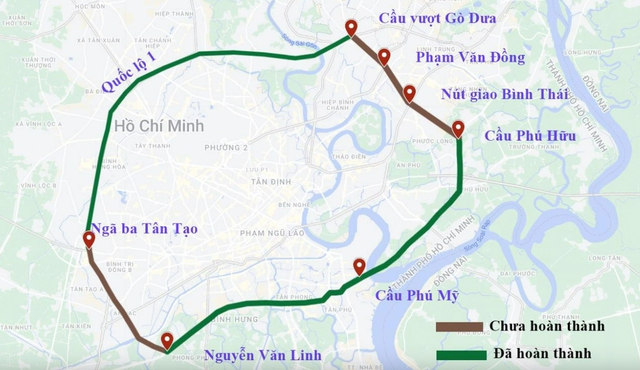
Ring road 2 was planned in 2007, with a length of 64km and a scale of 6-10 lanes. It starts from Nguyen Van Linh Street (Binh Chanh district), stretches to National Highway 1, and then loops back to Nguyen Van Linh, forming a ring road around Ho Chi Minh City. The total investment capital for this project is 12,540 billion VND, making it a vital infrastructure for transportation in the suburban areas of the city.
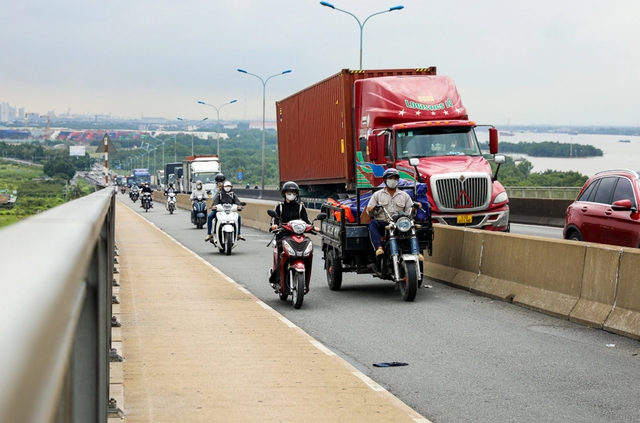
In addition, Ring road 2 plays an important role in connecting industrial zones, seaports, and highways. The picture shows Ring road 2 from the direction of Phu My Bridge (District 7) to Phu Huu Bridge (Thu Duc City). This is a bridge that connects the Tan Thuan Export Processing Zone in particular and the southern region in general with the eastern Ring road of the city. From here, goods can be easily transported to the Cat Lai port system through Vo Chi Cong and Dong Van Cong roads, helping to alleviate traffic congestion on National Highway 1A.
11 Dec 2023
After 9 months of searching, Mrs. Bich Nguyen, an accountant at a food company in District 1, still hasn't found an affordable apartment for under 3 billion VND in Ho Chi Minh City.
Mrs. Nguyen initially planned to buy a two-bedroom apartment, not too far from the city center, with a price range of 2-2.5 billion VND. She and her husband researched projects in the An Duong Vuong area (Binh Tan District). However, a 48 square meter one-bedroom apartment there is already priced at 2.8 billion VND, while two-bedroom apartments with an area of 58-63 square meters, in the worst location, range from 3.1-3.3 billion VND (excluding VAT).
Switching to another project on Vo Van Kiet Street, Mrs. Nguyen said that the price for a two-bedroom apartment, with an area from 62 square meters and above, is over 3 billion VND excluding VAT. According to real estate brokers, these are currently the only two projects in the area with available units for sale and the most "affordable" prices. "Beyond our financial means, we have to explore other areas," she said.
Moving to the Eastern area, Mrs. Nguyen became even more shocked as all the projects here were priced above 50 million VND per square meter. One project, located quite far from the city center, on the Belt Road 3 route, advertised the "cheapest" price in the market at only 45 million VND per square meter, but in reality, all units with good positions and decent areas were over 3 billion VND.
"We intended to look for older apartments, but the ones with good quality, with no legal complications, are priced over 45 million VND per square meter. The cheaper ones either have legal issues or the quality has deteriorated," Mrs. Nguyen said.
Mrs. Hoa, 35 years old, living in Tan Phu District, also mentioned that she had saved for many years in the hopes of buying an apartment in Ho Chi Minh City for settling down and establishing her career. However, her current family budget can only afford an apartment for around 2 billion VND (after considering borrowing 1 billion VND).
Last week, she looked into apartments in an urban area located on Bo Bao Tan Thang Street (Tan Phu District), but an 80 square meter unit was priced at 3.9 - 4.3 billion VND, while 55-60 square meter units were priced at 2.5-2.7 billion VND and were unfortunately located in blocks affected by legal complications.
Her husband and she are currently considering an older condominium on Luong Minh Nguyet Street, Tan Thoi Hoa Ward, with the prices of 2.9-3.2 billion VND for 60-66 square meter units. "Three years ago, the price for this condominium was only 30-32 million VND per square meter, but we couldn't afford it at the time. Now, with the price rising to 45 million VND per square meter, we can't afford it either. Our income is increasing slowly, while housing prices are rising rapidly, so no matter how much we save, it's still not enough to buy a house," Mrs. Hoa shared her frustration.
According to data from the Batdongsan website, in the third quarter of this year, the demand for buying apartments at prices below 40 million VND per m2 is very high. However, in Ho Chi Minh City, there is only one project selling below 40 million VND per m2, while the rest are priced from 45-80 million VND. Most of the projects being launched in the period of 2022 - 2023 have prices above 3 billion VND per unit.
In response to this trend, Mrs. Duong Thuy Dung, CEO of CBRE Vietnam, said that in the first 10 months of this year, 96% of the available supply of apartments in Ho Chi Minh City were high-end, with an average price of 61 million VND per m2, with no affordable projects. Based on the amount of new projects planned for development in 2024, 71% of them are high-end; 16% are mid-range (priced below 2,000 USD, equivalent to below 46 million VND per m2); and 12% are affordable homes (priced below 1,000 USD, or below 23 million VND per m2).
CBRE Vietnam also states that in the past three years, the proportion of mid-range and affordable apartments in the city has continuously decreased. Specifically, in 2019, mid-range and affordable apartments accounted for 70% of the supply, which decreased to 20-30% in the 2020 - 2021 period, 6% in 2022, and 16% in the first 10 months of this year. "Mid-range and affordable apartments have good consumption power and high demand, but there is a lack of supply," said Mrs. Dung.
Data from Cushman & Wakefield also shows that in the past decade, the housing supply in Ho Chi Minh City has increased nearly 4.4 times, with prices increasing by 200%, with an average annual increase of 12% for apartment prices in the city. The report from the Ho Chi Minh City Real Estate Association also indicates that from 2020 to now, the city has been experiencing a supply imbalance, with high-end homes dominating 70-80% of the market. The remaining properties are mid-range homes, and there are no affordable options.
"The current housing prices have exceeded the financial capacity of people with average urban incomes. To buy an apartment worth 2-3 billion VND, even with an annual savings of about 100 million VND, those in the first tax bracket (those who are financially unable to afford a commercial house and do not meet the requirements for a social house) would need 25 years to be able to afford a home,"
20/11/2023
The continuous decrease in interest rates has been impacting the Net Interest Margin (NIM) of banks in the third quarter, but it is expected to improve from the fourth quarter.
The NIM of all banks has declined.
NIM (Net Interest Margin) is the difference between a bank's interest income and interest expenses, also referred to as the net interest income. NIM can also be understood as the difference in interest rates between funding activities (interest on deposits) and lending activities (interest on loans) of a bank. Therefore, interest rates directly influence NIM.
During the first nine months of 2023, the continuous fluctuation in interest rates was predicted to affect the NIM of banks. In the October 2023 Strategic Report, KBSV expects that the NIM of banks will reach its bottom in the third quarter and start recovering from the fourth quarter. However, it may not reach the high levels of 2022.
KBSV also notes that the risk to the recovery of NIM may arise from the decrease in the Short Funding for Long Loans (SFL) ratio to 30%, which would require some banks to adjust their funding portfolios and increase the proportion of long-term funding, leading to higher capital costs. Additionally, the interest rate competition among banks when Circular 06 is implemented (allowing borrowing from one bank to repay another) will have a negative impact on the overall NIM of the industry.
Data from VietstockFinance shows that all 28 banks recorded a decrease in their average NIM in the third quarter compared to the second quarter.
VPBank had the highest NIM coefficient in the third quarter, reaching 5.65% but declined from 6.32% in the second quarter and 6.96% in the first quarter. Next were MB (5.24%), VIB (4.73%), HDBank (4.66%), and ACB (4.13%).

The NIM has narrowed, but low-cost funding sources are starting to show effectiveness.
In a sector report published on November 8, 2023, VNDirect stated that the decrease in NIM was due to the slower increase in lending rates compared to the growth of funding costs to support customers, which is in line with the recommendations of the State Bank of Vietnam (SBV).
Among joint-stock commercial banks, only STB, VIB, and CTG have the ability to maintain stable or higher NIM compared to the same period. Particularly, VIB and CTG have utilized interbank lending with a higher proportion compared to the same period (the lowest level since 2022) in their funding structure to reduce the cost of funds (COF).
For STB, the absence of pressure from accrued interest has driven strong NIM growth in 2023.
Meanwhile, the NIM of banks with a high proportion of corporate bonds such as VPB and TCB continued to decrease the most.
However, the positive signal is that the industry's cost of funds has decreased due to the effective implementation of low-cost funding sources, and the CASA ratio has increased (from 18.1% at the end of Q2 2022 to 18.9% at the end of Q3 2023).
In Q4 2023, VNDirect expects the COF to decrease further as low-cost deposits will account for a higher proportion in banks' funding structure (deposit interest rates have declined significantly, by 40-100 basis points, across all terms in Q3 2023). However, NIM may not improve immediately in the current context of weak credit demand.
VNDirect believes that some banks with a high proportion of consumer lending and a low ratio of USD-denominated deposits will have a better opportunity to improve NIM compared to other banks. In 2024, the securities company expects NIM to have the potential for recovery due to the return of credit demand along with economic growth.
23/11/2023
In any office around the world, with three computers running, at least one of them has a "brain" - a CPU, manufactured in Ho Chi Minh City. This is the result of over 17 years of investment by Intel - the world's first high-tech corporation, choosing Vietnam for a billion-dollar project.
The US chip manufacturer holds about 70% of the global market share for computer CPUs. Meanwhile, the factory in the Ho Chi Minh City High-Tech Park (SHTP) is assembling, testing, and packaging over half of Intel's total chips.
"Calling Intel is an important milestone in the process of attracting FDI," said Mr. Pham Chanh Truc, former Deputy Secretary of the Ho Chi Minh City Party Committee and the first Head of the Management Board of SHTP. Mr. Truc played a key role in the two-year-long negotiations to bring the US semiconductor corporation to Vietnam.
After Intel, many global technology brands such as Samsung and LG have also established billion-dollar factories in Vietnam, along with a series of assembly units for Dell and Apple. From clothing, shoes, to the phrase "made in Vietnam," it has started to appear on TVs, smartphones, smartwatches, and semiconductor chips consumed worldwide.
Nowadays, electrical and electronic devices have become the most important commodity, accounting for nearly half of Vietnam's total export value, reaching $155 billion, a fivefold increase in 10 years. Vietnam has entered the top 10 countries supplying electrical and electronic equipment to the world. However, the billions of dollars invested by these corporations in Vietnam have given the country a new image on the trade map, but they have not yet been able to elevate the economy to a higher value level.
"Vietnam still specializes in assembling basic components and simple processing, while specialized components and equipment have not made any progress" is the conclusion drawn in the first and only Industrial White Paper, published by the Ministry of Industry and Trade in 2019.
That is not the result that the founders of the foundation aimed to achieve in attracting technology investors, such as Mr. Truc.
"High-tech parks or any investors are just the initial core. The ultimate goal must be the spillover effect to drive the development of our own industry," he said.
After the Đổi mới (Renovation) period, Ho Chi Minh City became the location for the country's first export processing zone - Tan Thuan, established in the southern part of Saigon in 1991. The model was learned from Taiwan, leveraging tax and customs incentives to attract foreign businesses to set up processing and exporting factories. The first investors who came to Tan Thuan were mostly involved in the textile, garment, leather, and footwear industries - sectors representing the early stages of industrialization.
However, both the city's leaders and the central government realized that if they were to integrate late, they needed to find a fast development direction and could not linger in traditional industries.
"We must elevate the export processing zone to access advanced world technologies," recalled Mr. Pham Chanh Truc (then Vice Chairman of the Ho Chi Minh City People's Committee in charge of foreign economic affairs) during a meeting between the city's leaders and Chairman of the State Committee for Cooperation and Investment, Dao Ngoc Xuan.
That was the premise for the establishment of the Ho Chi Minh City High-Tech Park (SHTP). Mr. Truc himself was responsible for researching and implementing this idea in 1992. It took 10 years for SHTP to be officially established, becoming the country's first high-tech park in 2002.
At that time, Mr. Truc was 62 years old, serving as Deputy Head of the Central Economic Commission and preparing for retirement. However, when the Party Committee's leaders proposed that he become the Head of the SHTP Management Board, he immediately agreed, putting his retirement plans on hold.
"This position is only equivalent to a department director, but I didn't compare it to the position and accepted it immediately because I wanted to complete the unfinished project," he recounted.
Mr. Truc discussed with Mr. Xuan that if SHTP could attract an investor from the Fortune 500 list of the largest US companies, it would be a significant boost for Ho Chi Minh City and the whole country.
The first target was HP, as the person in charge of expanding the company's manufacturing operations at that time was a Vietnamese overseas - an advantage for the city. However, this person passed away suddenly, causing the plan to bring HP's investment into SHTP to remain unfinished.
After contacting several other companies, the city was determined to attract Intel when they learned that the largest chip manufacturer in the US was looking for a location to build a new assembly and testing plant in Asia. Vietnam was among the options.
In 2003, Deputy Prime Minister Vu Khoan led a Vietnamese delegation to Intel's headquarters in the US, carrying a letter from Prime Minister Phan Van Khai inviting the corporation to invest and introducing two locations: Hoa Lac High-Tech Park (Hanoi) and SHTP.
In the following years, Intel had sent several delegations to Ho Chi Minh City to explore the conditions of infrastructure, logistics, transportation, human resources, and incentive policies.
"The city has never encountered any investor that has set such detailed and stringent conditions like Intel," Mr. Truc said. As a result, the negotiations had to address "numerous unprecedented requirements" and involved company executives from the United States, leading to late-night meetings.
During a discussion on electricity prices, Mr. Truc directly contacted Deputy Prime Minister Nguyen Tan Dung, who was responsible for overseeing the negotiations at that time, to seek the government's opinion. After receiving the green light, he promptly reached an agreement on incentives with Intel.
"If I had followed the standard procedure of sending written requests to EVN and various ministries, and waiting for the government's conclusion, I wouldn't have known when I could respond. Not all demands can be met immediately by the city, but our commitment made them feel confident," said the former head of the SHTP Committee.
During Prime Minister Phan Van Khai's visit to the United States in 2005, the negotiation delegation even went to Intel's headquarters in California to discuss directly with the company's top executives. However, upon arrival, Mr. Truc was informed that the Chairman of Intel was in Washington D.C.
"We immediately flew to the U.S. capital and invited the Chairman to the Vietnamese Embassy for discussions," Mr. Truc said.
It was during this meeting that the highest-ranking leadership of Intel confirmed their plan to build a $600 million factory in Ho Chi Minh City, with the intention of increasing the investment to $1 billion after obtaining the license a year later.
Three years after the groundbreaking ceremony, Intel began producing the first "made in Vietnam" chips in 2010. At that time, no domestic company had the capability to become a partner of the American corporation.
Today, the factory has over 100 Vietnamese enterprises in its supply chain network, according to Mr. Kim Huat Ooi, Vice President of Manufacturing, Supply Chain, and Operations, and General Director of Intel Products Vietnam.
However, the progress in terms of quantity does not go hand in hand with quality. After 13 years, no Vietnamese company has been able to directly supply materials for the assembly and packaging of chips, such as substrates, capacitors, flux materials, solder, or adhesives. The equipment and machinery in Intel's production line are also not sourced locally.
The playing field for domestic companies remains outside the direct manufacturing line of the semiconductor corporation. It involves indirect inputs such as conveyor belts, furniture, equipment, transportation services, manpower, and security.
In other words, although Vietnam is the birthplace of over half of Intel's products, the domestic manufacturing industry has not been able to provide any essential inputs for the chips. Local businesses are still unable to soar alongside the "eagle."
Samsung is another example that illustrates Vietnam's position in the global value chain. More than half of the smartphones produced by this brand are manufactured in factories located in Bac Ninh and Thai Nguyen.
Annually, the South Korean conglomerate publicly discloses its key suppliers, which account for 80% of the company's procurement value. According to last year's list, 26 major Samsung suppliers are operating in Vietnam. Among them, 22 companies are from South Korea, 2 from Japan, 2 from China, and none are Vietnamese enterprises.
In the global value chain, the forward linkage ratio reflects a country's ability to provide input components to another country's businesses for the production of final products. Conversely, the backward linkage indicates dependence on imported raw materials and components for manufacturing within a country.
Vietnam currently has a much lower forward linkage ratio compared to many other Southeast Asian countries, and it is continuing to decrease. Meanwhile, the backward linkage ratio is gradually increasing, indicating a growing reliance on imports for assembling finished products.
"Foreign direct investment (FDI) corporations find it challenging to establish deep roots in Vietnam due to the fragile linkages with the domestic economy," stated Nguyen Dinh Nam, Chairman of the Board of Directors and CEO of the Vietnam Investment and Cooperation Promotion Corporation. Vietnam's primary role with foreign enterprises remains the provision of labor and low-cost positioning.
Similarly, Phan Huu Thang, former Director of the Foreign Investment Agency, Ministry of Planning and Investment, believes that the FDI attraction policy has long aimed to access and learn core technologies from leading industrial nations. However, after more than three decades, the technology transfer objective has not been achieved effectively, and a significant reason is the lack of linkage between foreign and domestic businesses.
Meanwhile, investors also want to increase localization rates to reduce costs compared to imports, according to Matsumoto Nobuyuki, Chief Representative of the Japan External Trade Organization (JETRO) in Ho Chi Minh City.
Mr. Nobuyuki is frequently asked by many Japanese corporations to connect them with Vietnamese businesses for additional domestic suppliers, especially for critical components. However, he stated, "Very few companies meet the standards of Japanese enterprises."
Around 97% of domestic enterprises are small and medium-sized, with limited capital and management capacity. On the other hand, becoming a supply partner for global manufacturers requires significant technological investment.
"The barriers mentioned above have resulted in most Vietnamese businesses remaining outside the supply chains of high-tech corporations," a group of experts from the Fulbright School of Public Policy and Management highlighted in a 2016 report summarizing Intel's investment in Vietnam.
Therefore, large corporations investing in Vietnam typically bring along their existing supplier networks from foreign countries and then seek to support and train domestic enterprises to participate in the supply chain. However, not every company has the necessary resources.
Earlier this year, a customer of CEO Nguyen Dinh Nam, a German medical equipment manufacturer, announced that they would choose Indonesia instead of Vietnam for their planned factory.
"They searched from the north to the south but could not find chip and circuit suppliers for their devices, so they had to give up, despite acknowledging Vietnam's favorable incentive policies," said Mr. Nam.

Intel is investing billions of dollars in a factory in Vietnam for assembly, testing, and packaging processes. The chip manufacturing and design processes are carried out in another country.
For example, with a high-end smartphone from Samsung, the assembly and testing process carried out in Vietnam accounts for only 5% of the production cost, according to TechInsights, a technology research company based in Canada, analyzing data from 2020.
"Every country wants to take on high-value-added tasks, but multinational corporations will allocate activities according to the capabilities of each country," said Do Thien Anh Tuan, co-author of the Intel operations research in Vietnam at Fulbright University.
In the chip industry, after the design phase, the production process takes place in two types of factories: fabrication (Fab) and assembly, testing, and packaging (ATM). Intel has 5 fabrication plants in the United States, Ireland, Israel, and 4 packaging plants in Costa Rica, China, Malaysia, and Vietnam.
Kim Huat Ooi stated that the company's plan is to continue focusing on assembly and testing at the facility in Ho Chi Minh City. Vietnam plays a significant role in the company's production process, with the largest output among the ATM factories.
However, Malaysia was the first country outside the United States where Intel chose to deploy its most advanced 3D chip packaging technology. Unlike Vietnam, Malaysia has a complete semiconductor manufacturing ecosystem with domestic enterprises handling all stages from design, fabrication, to chip assembly and testing.
In addition to Malaysia, Singapore also has chip fabrication plants. These two countries, along with Thailand and the Philippines, rank higher than Vietnam in the ECI (Economic Complexity Index), which reflects the ability to produce complex products, as calculated by Harvard University. Despite being one of the fastest-growing countries in the past 20 years, Vietnam ranks 61st out of 133 countries in this index globally, higher than Indonesia, Laos, and Cambodia in Southeast Asia.
Although Vietnam is the most attractive destination for Japanese businesses seeking to implement the "China + 1" strategy to diversify their manufacturing locations outside the world's most populous country, it still only attracts assembly tasks.
"If Vietnam wants to climb higher, it should forget about low-productivity jobs and focus on value-added activities," said Mr. Nobyuki.
This recommendation is not new but has become increasingly urgent as the advantage of labor-intensive activities, which is the main attraction for assembly and processing operations, is diminishing along with the rapid aging of the population in the region. The peak of the golden population era has passed, and Vietnam's labor force will begin to decline in 15 years, according to forecasting models by the United Nations Population Fund.
According to Mr. Do Thien Anh Tuan, the labor productivity of Vietnamese workers is still slow to improve and lags behind other ASEAN countries, while wages continue to rise, making the actual labor costs associated with productivity not cheap. "Investing in human resources and science and technology to move up the value chain must be the top priority," he said.
More than 30 years since the first ideas were outlined for a high-tech industrial park, Mr. Pham Chanh Truc still hasn't seen an advanced manufacturing sector as he had hoped.
"We have a few high-tech companies, but they are still too few. The majority are still engaged in assembly. If we continue at the current pace, how can we achieve the goal of becoming a prosperous country?" Mr. Truc expressed his concerns.
Vocabularies
forward linkage ratio: tỷ lệ liên kết xuôi
backward linkage: liên kết ngược
Source: https://vnexpress.net/dai-bang-o-tro-4679519.html
Written on 14/8/2023
Late in the afternoon in Manila at the end of July, rain poured down under Typhoon Doksuri. I was sharing a few beers with a Filipino friend in a cozy bar.
At our age, children are always a topic that easily brings a sense of mutual understanding. I boasted, “My kid often plays online games with kids over here.” My friend smiled, “Yeah, probably to learn English, right?”
For the past few years, the Philippines has become a familiar destination for Vietnamese people to study English, both online and offline. Filipinos’ English proficiency also stands out compared to other ASEAN countries, since English has been an official language there since the late 19th century, back when the United States still colonized the archipelago.

10 June 2023
HCMC's Ring Road No.3 is a major traffic project in southern Vietnam, construction of the road which is set to begin this month. The first phase of the project will involve the construction of a 76-kilometer section with four lanes, with each locality responsible for clearing and building the portion within their territory.
One notable feature of the road is an overpass that will connect it to the HCMC - Long Thanh - Dau Giay Expressway, linking Dong Nai province with HCMC and connecting to the Dau Giay - Phan Thiet Expressway leading to the coastal city of Phan Thiet. Construction of the 47-kilometer section within HCMC is scheduled to commence on June 18 2023, while the other localities plan to start their respective sections later this month.
Ring Road No.3 will also serve as a connector to four other expressways: HCMC - Trung Luong, connecting HCMC with the Mekong Delta; Ben Luc - Long Thanh, the longest expressway in the south, linking HCMC with Long Thanh and Dong Nai provinces; HCMC - Moc Bai, facilitating travel between HCMC and the Cambodian border; and HCMC - Chon Thanh, connecting HCMC with Binh Duong province.
In HCMC, the road will feature a 13-kilometer elevated section, designed to optimize site clearance costs. The entire Ring Road No.3 will span 6 kilometers in Long An province and approximately 11 kilometers each in Binh Duong and Dong Nai provinces. Efforts are underway in Binh Duong to compensate affected families.
The project in Dong Nai province involves linking Nhon Trach District with HCMC's Thu Duc City, and a bridge over the Rach Chay River. The largest bridge on the road, costing VND1.8 trillion, will stretch 2.6 kilometers in length and 19.5 meters in width, including leading roads from both sides extending a total of 5.6 kilometers. The first phase of the ring road is expected to be completed in 2026, contributing to the socio-economic development of the southern region.
Published at 14 Nov 2023
Foreign direct investment (FDI) in Vietnam is experiencing a surge as the country becomes increasingly attractive to foreign investors. According to M&A experts, investors from Europe, Japan, the U.K., and the U.S. are eager to enter the Vietnamese market.
Vietnam's political stability, growing consumer spending, and competitive wages are among the factors drawing the attention of European and American investors.
According to the agency, the major investment destinations in the country this year include Ho Chi Minh City, Hai Phong, Quang Ninh, Bac Giang, Hanoi, Bac Ninh, Binh Duong, and Dong Nai.
In the first 10 months of 2023, FDI reached $25.7 billion, a 14.7% increase compared to the previous year. Key sectors of interest for international investors include food, consumer goods manufacturing, retail, education, non-bank financial technology, and logistics.
This year, significant M&A deals have taken place with the participation of investors from Japan and the U.S. One notable transaction involved Sumitomo Mitsui Banking Corporation acquiring a 15% stake in VPBank through a private placement, valued at US$1.5 billion. Additionally, KKR Global Impact invested US$120 million in EQuest.
To further attract FDI, policymakers are advised to simplify the divestment process and improve regulations. The average duration of M&A transactions in Vietnam is nine months, and companies planning to sell are recommended to engage consultants at least a year in advance to identify potential buyers and negotiate prices.
"When putting money in, investors consider how they can withdraw it [later]. Company registration and acquisition are already convenient in Vietnam, but the divestment process needs to be improved and made simpler to attract investors."
16/10/2023
The industrial land rental prices are expected to increase by 6-10% per year in the northern region and 4-8% per year in the southern region. The optimistic demand from various industries and nationalities renting properties contributes to the growth of rental prices in localities.
According to many experts, the industrial real estate market continues to observe positive developments in the third quarter of 2023.
Information from CBRE Vietnam reveals that, despite the northern region experiencing a slight decline, with an average occupancy rate of industrial parks in the first-tier market reaching 80.2% in the third quarter of 2023, a decrease of 2.4 percentage points compared to the second quarter but an increase of 0.4 percentage points year-on-year. This decline in occupancy rate is attributed to the operation of new industrial parks in Bac Ninh and Hung Yen, leading to an additional supply of 597 hectares of industrial land.
Regarding demand, the market has witnessed significant transactions from tenants in the plastic manufacturing, textile, and eyeglass industries. Accordingly, the absorption rate of industrial land in the first-tier market reached 251 hectares in the quarter. Thus, in the first nine months of 2023, the absorption rate exceeded 700 hectares, which is more than 18% higher than the absorption rate for the entire year of 2022. Furthermore, industrial land rental prices continue to increase due to optimistic demand. Specifically, in the recent third quarter, the average rental price for the first-tier market in the northern region reached $131 USD/m2/lease term, representing a 2% quarterly increase and a 12% annual increase.
Similarly, the industrial market in the southern region has an average occupancy rate of industrial parks reaching 81.9%. The absorption rate of industrial land in the third quarter exceeded 190 hectares, a 5.9% increase compared to the previous quarter. In total, for the first nine months of 2023, the absorption rate reached over 770 hectares, nearly equal to the absorption rate for the entire year of 2022. The average rental price for the first-tier market in the southern region reached $189 USD/m2/lease term, showing a slight 1% increase compared to the previous quarter and a 13% increase from the same period last year. The market has witnessed significant transactions from Chinese and Japanese enterprises in various industries such as mechanical engineering, chemicals, plastics, rubber, and electronics.
CBRE statistics also show that in the first nine months of the year, the northern and southern markets recorded 752,000 m2 of newly operational warehouses and 450,000 m2 of newly operational ready-built factories. In the northern market, the average rental price for warehouses is around $4.6 USD/m2/month, while for factories, it is around $4.8 USD/m2/month. The occupancy rate of ready-built factory projects in the first-tier market reached 82.9%, an increase of 4.7 percentage points compared to the previous quarter.
As for the southern market, with abundant new supply, relatively stable rental prices for warehouses and ready-built factories were observed, with an average rental price of $4.5 USD/m2/month for warehouses and $4.9 USD/m2/month for factories. The occupancy rate for ready-built warehouses reached 56%, a decrease of 15 percentage points compared to the second quarter and 13 percentage points compared to the same period last year. Meanwhile, the occupancy rate for ready-built factories remained at a good level, reaching 91%, an increase of 1 percentage point compared to the second quarter.